
Under the glow of ultraviolet light, uranium glass reveals its captivating secret: an ethereal fluorescence that has enchanted collectors and artisans for nearly two centuries. This distinctive glass, known for its vibrant yellow-green hues, embodies a rich history at the intersection of art, science, and culture. Its journey from the workshops of 19th-century Bohemia to the collections of modern enthusiasts offers a fascinating glimpse into human creativity and innovation. The artistry of uranium glass, particularly in pieces like the rare Art Deco vase by Karl Palda, encapsulates a unique chapter in the history of science, culture, and aesthetics.
The story of uranium glass begins in the early 19th century. In 1789, German chemist Martin Heinrich Klaproth discovered uranium, identifying its potential as a coloring agent. By the 1830s, glassmakers in Bohemia—a region renowned for its glassmaking expertise—began incorporating uranium dioxide into their glass mixtures, resulting in glass with a distinctive yellow or green tint. This innovation quickly gained popularity, with factories like Choisy-le-Roi in France producing uranium glass by 1838. (The Glass Museum)
Bohemia, under the Habsburg Empire, became a hub for uranium glass production. The region’s abundant natural resources and skilled artisans fostered an environment where this unique glass could thrive. The Habsburgs’ patronage of the arts further propelled the popularity of uranium glass, making it a sought-after material across Europe.

The vibrant colors of uranium glass are a direct result of the addition of uranium oxides, which, when fused with glass, produce hues ranging from delicate greens to deep, glowing yellows. The most common of these compounds is uranium dioxide, which, when incorporated into molten glass, grants the material a unique ability to fluoresce under ultraviolet light. This striking visual effect added an otherworldly glow to glass pieces, transforming them from everyday objects into captivating works of art.
In the early 19th century, the first uranium glass was created almost by accident in the glassmaking regions of Bohemia. The Bohemian artisans, renowned for their mastery of glass manipulation, found that uranium oxides imbued their creations with a brilliance that had never before been seen. This discovery quickly spread across Europe, with artisans from Venice, France, and Britain all experimenting with the material, each adding their own regional flair to the burgeoning craft.
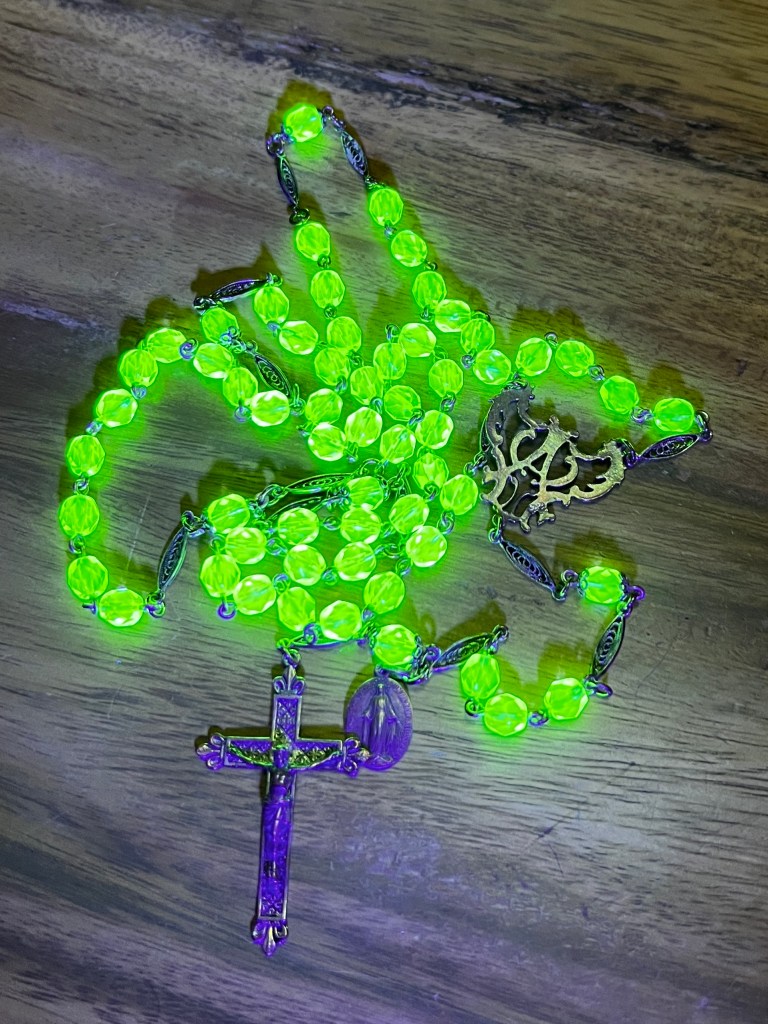
Victorian England, with its love for novelty and exoticism, embraced uranium glass wholeheartedly. Often referred to as “Vaseline glass” for its yellowish, jelly-like appearance, uranium glass became a symbol of both progress and the marvels of modern science. For the Victorians, these radiant objects were not merely decorative—they were tangible representations of humanity’s ability to harness the mysterious forces of nature for both utility and beauty.
As with many European innovations, uranium glass made its way across the Atlantic and into the American market, where it found fertile ground in the hands of U.S. glassmakers. By the late 19th and early 20th centuries, American artisans, such as those at the Fenton Art Glass Company, were producing uranium glass that rivaled Europe’s finest pieces. From tableware to vases, these glowing creations became prized possessions in American households, embodying the spirit of innovation and artistry.

However, as the 20th century progressed, uranium glass’s popularity waned. The rise of nuclear science, particularly the development of the atomic bomb, cast a darker shadow over the once-innocent material. Uranium, once associated with beauty and scientific curiosity, was now linked to global fear and destruction. As a result, the production of uranium glass slowed dramatically, and it became a relic of an obsolete era—a curiosity from a time when science and art footed more harmoniously together.
But uranium glass experienced a resurgence of interest with the invention of the black light in the early 20th century. Under ultraviolet rays, uranium glass reveals its full potential, glowing with an almost mystical fluorescent intensity. This interplay between UV light and uranium glass captivated collectors and added a new layer of intrigue to an already fascinating material. What had once been a simple decorative object became a source of wonder, leading to the material’s continued appreciation among modern collectors.
Today, uranium glass has become a beloved collectible for a diverse community of enthusiasts. Prominent collectors like Dan and Lisa Sawyers have amassed hundreds of pieces, including not just jewelry but also intricately carved serving dishes and whimsical items like bird-shaped salt dips. Their journey began serendipitously when they discovered a glowing shard of sea glass along Lake Superior, sparking a lifelong passion for uranium glass (Atlas Obscura).
Phil Broughton, a health physicist and uranium glass collector, approaches the material from a scientific perspective. He emphasizes the relative safety of handling uranium glass compared to other radioactive materials and advocates for its appreciation as a bridge between art and science (Atlas Obscura).
Dave Peterson, co-founder of Vaseline Glass Collectors, Inc., has helped preserve the legacy of uranium glass through his publications and community-building efforts. His scholarly approach has created a global network of collectors who celebrate the material’s artistry and history (Collectors Weekly).
As a collector myself, my interest spans both the artistic and historical dimensions of uranium glass. My collection, which includes rare Taisho-era uranium glass clocks and pieces from around the world, reflects the material’s global reach and enduring appeal. To me, uranium glass is more than a collectible; it is a medium for storytelling, illuminating the intersection of innovation and beauty across cultures and eras.

References
- Antique Answers. (n.d.). Uranium Glass Manufacturing: When and Where It Was Made. Retrieved from https://antiqueanswers.com/uranium-glass-manufacturing-when-and-where-it-was-made/
- Atlas Obscura. (n.d.). How collectors are preserving the radioactive glow of uranium glass. Retrieved from https://www.atlasobscura.com/articles/uranium-glass-radioactive-plates-cups
- Collectors Weekly. (n.d.). These people love to collect radioactive glass. Retrieved from https://www.collectorsweekly.com/articles/these-people-love-to-collect-radioactive-glass/
- ORAU Health Physics Museum. (n.d.). Vaseline and Uranium Glass. Retrieved from https://orau.org/health-physics-museum/collection/consumer/glass/vaseline-uranium-glass.html
- The Collectors Who Hunt Down Radioactive Glassware. Retrieved from https://www.atlasobscura.com/articles/uranium-glass-radioactive-plates-cups
- These People Love to Collect Radioactive Glass. Are They Nuts? Retrieved from https://www.collectorsweekly.com/articles/these-people-love-to-collect-radioactive-glass/
- Vaseline and Uranium Glass (ca. 1930s). Retrieved from https://orau.org/health-physics-museum/collection/consumer/glass/vaseline-uranium-glass.html
- Uranium glass – Wikipedia. Retrieved from https://en.wikipedia.org/wiki/Uranium_glass
 Ángel Rafael Vázquez-Concepción