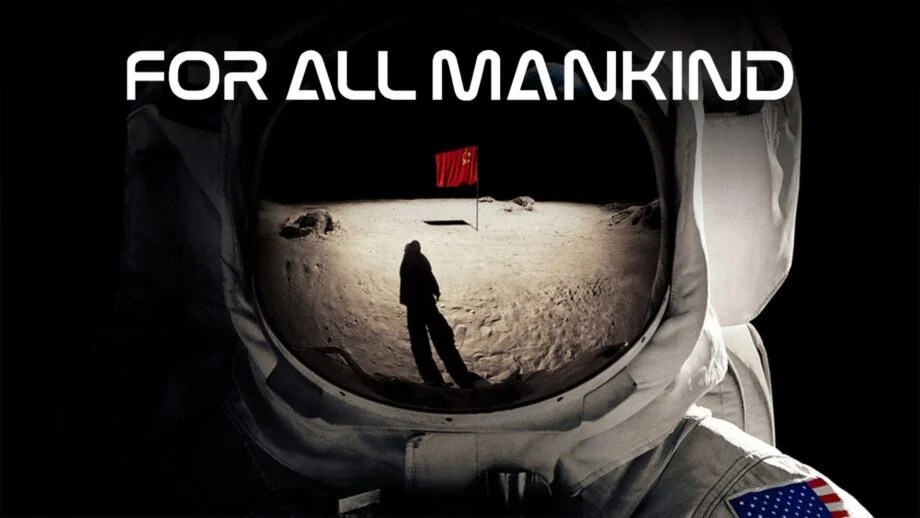
“For All Mankind” is a captivating streaming series that immerses its audience in a reality of the space race going beyond the confines of the 1960s. This unique version of history does not just serve as a backdrop, it also shapes global and personal narratives, resulting in a world that feels familiar and refreshingly new.
This series shows the Soviet Union triumphing over the United States in reaching the moon, leading to a Cold War and an ongoing pursuit of space exploration. This pivotal event drastically altered the course of history, influencing advancements in space technology and reshaping landscapes worldwide. The show skillfully blends figures and events with fictional elements, weaving together a narrative tapestry that feels authentic yet brilliantly imaginative.
The series explores the dimensions of this protracted space race, from the tensions between nations to the technological breakthroughs driven by fierce competition. It delves into the professional lives of NASA astronauts, engineers, and their families—shedding light on their sacrifices, challenges, and moments of triumph associated with venturing into space. It tackles issues like gender equality and representation for marginalized groups within space exploration—an insightful commentary on historical progress and contemporary concerns.
One aspect that truly shines is how each character undergoes growth and transformation throughout the series—a testament to character development. The show is a masterclass in the way real-life figures and fictional characters handle the pressures of their roles and personal lives in this reality.
One notable aspect of “For All Mankind” is the attention to detail in costume design. The series accurately captures each decade’s fashion trends, starting from the 1960s. This meticulousness extends to the space outfits, combining historical authenticity with speculative design, reflecting the series’s unique fusion of history and science fiction.
Wrenn Schmidt’s portrayal of Margot Madison in “For All Mankind” is remarkable, representing character development that embodies the series’ themes. Margot starts as a NASA engineer, a role that separates her from a male-dominated environment like the 1960s space program. She isn’t a background character; she plays a part in driving the narrative forward while showcasing the challenges and breakthroughs faced by women in STEM fields during that era.
As the series unfolds, Margot’s journey from being an engineer to becoming a leader within NASA encapsulates how society evolves. Her growth encompasses both personal aspects as she navigates through dynamics within her high-stakes field, often biased against her gender. Margot’s character development showcases women’s challenges in advancing their careers in science and technology.
Her role within the series also highlights the evolving dynamics and attitudes towards women in different settings. Through her determination, intellect, and leadership qualities, Margot eventually earns recognition and respect from her colleagues at NASA. This mirrors the progress made in achieving gender equality within these fields. Margot’s journey is a microcosm of changes over time, making her relatable and inspiring to viewers.
Margot’s storyline intersects with plot points and characters throughout the series, adding depth to the narrative. Her interactions with both female characters provide a range of experiences and perspectives from the space race era. Through Margot’s character, viewers gain insight into themes explored in the series. Such as how individual lives are impacted by the space race and how societal norms are shaped.
Furthermore, the series benefits from a cast of actors contributing to the intricate web of relationships and events unfolding throughout its narrative. Each character portrayed by this cast adds depth to the story, creating interactions and personal journeys set against the backdrop of an ongoing space race that introduces drama and tension.
The relationships between these characters, both personally and professionally, play a role in the plot of the series. The interactions among the astronauts, engineers, and their families bring a touch to the story, making the high-stakes space exploration relatable through shared experiences. The actors’ skill in portraying the complexities of these relationships adds to the series’ realism and emotional depth.
The ongoing competition in space fuels technological advancements within this timeline while influencing politics and societal norms. The series takes us on a journey to understand how outcomes in space exploration shaped dynamics during the Cold War era, leading to new alliances and conflicts on a global scale. This prolonged rivalry between superpowers drives innovation and rapid progress in space technology that surpasses what has unfolded in our history. Furthermore, this alternate history has impacts on society and culture as well.
The series explores the changing roles and recognition of women and minority groups within NASA and society. It reflects on how the ongoing space race could have spurred changes in different ways compared to our reality. This narrative aspect offers a thought-provoking commentary on gender equality and racial diversity, presenting a world where these issues develop alongside advancements in space exploration.
Additionally, the series delves into the lives of its characters against the backdrop of competition both on Earth and in outer space. It delves into the psychological impact of living in a world where space exploration is a matter of national pride and international politics. Through their struggles, triumphs, and interactions, the characters add a touch to the story of space exploration.
“For All Mankind” subtly reflects on the consequences of a space race. It touches upon impacts on Earth, international relations, and ethical considerations regarding space colonization. These themes raise questions about balancing exploration and its moral implications. The series serves as a platform for reimagining while encouraging more profound reflections about our world and its future.
It’s worth highlighting Jill M. Ohanneson’s costume design in “For All Mankind,” which showcases both authenticity and creativity. The costumes worn by the characters in the series accurately represent the fashion trends of their periods, which adds a touch to the alternate reality setting. On the other hand, the outfits for space exploration are meticulously designed to showcase accuracy while incorporating speculative elements. This attention to detail aligns perfectly with how the series combines science fiction elements.
“For All Mankind” goes beyond being a show about space exploration; it takes us on a thought-provoking journey into history. It offers a perspective on how international competition and cooperation impact the space race and explores how the public and private sectors intersect in this field. With its storyline, developed characters, and intriguing alternative reality concept, this series is highly recommended for anyone seeking an engaging viewing experience.
 Ángel Rafael Vázquez-Concepción
Best series I’ve seen in a long time. Awesome show. I hope it continues….I purchased Apple+ TV specifically for that show and I watch it on my android phone as I don’t have anything apple except that subscription.
LikeLiked by 1 person